If you feel a fishbone in the lower middle part of your neck, it may be accompanied by symptoms such as sore throat, difficulty swallowing, a foreign body sensation, cough, and difficulty breathing. It is recommended to seek medical attention immediately to avoid further complications.
1. Sore throat
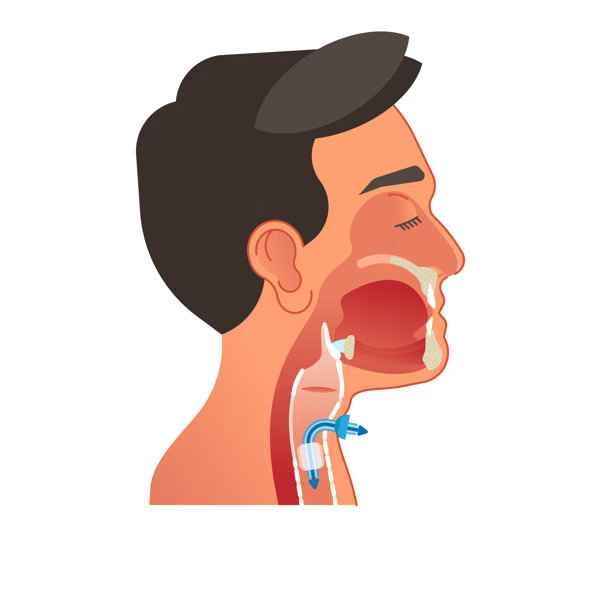
When a fishbone gets stuck in the throat, it can irritate the local mucous membrane, leading to inflammation and tissue damage. Because the fishbone may be located in sensitive areas such as the tonsillar fossa, the patient will experience significant pain.
2. Difficulty swallowing
When a fishbone gets stuck, it causes tension in the throat muscles, which affects the passage of food through the esophagus into the stomach, resulting in difficulty swallowing. At this time, the nerves in the throat are stimulated, reflexively closing the larynx to prevent the fishbone from moving further down.
3. Foreign body sensation
A fishbone stuck in the throat can cause local swelling and inflammation, which can lead to a feeling of something stuck in the throat. This sensation usually occurs deep in the throat because the location of the fishbone can cause local tissue deformation, resulting in discomfort.
4. Cough
A fishbone stuck in the throat can irritate the respiratory tract mucosa, leading to increased secretions and triggering a cough reflex. Coughing helps expel the foreign object, but it can also worsen discomfort in the throat.
5. Difficulty breathing
If a fishbone becomes lodged deep in the trachea or bronchi, it can obstruct airflow and cause breathing difficulties. Furthermore, pain and discomfort in the throat can also impair normal breathing. The deeper the fishbone is located, the greater the pressure on the respiratory system, and the more likely it is to cause breathing difficulties.
It is recommended to seek medical attention as soon as possible. You can visit an ENT specialist at a hospital. The doctor may use an indirect laryngoscope or fiberoptic laryngoscope to examine the throat and remove the fishbone. If necessary, an X-ray or CT scan may be considered for a more comprehensive assessment of the fishbone's location and depth. While waiting for your appointment, avoid eating solid food to prevent worsening discomfort.